
 Kakehashi Myanmar Overseas Employment Agency
Training Centers
From Japanese for Working in Japan to Education for Living in Japan
At Kakehashi Myanmar, we have established a Japanese Language and Human Resource Development Center in Yangon to help young people from Myanmar live, work, and grow with confidence in Japan.
To work successfully in Japan, Japanese language proficiency alone is not enough. It is equally important to understand Japanese culture and customs, attitudes toward work, workplace expectations, and proper manners as a working professional.
For this reason, we go beyond simply teaching Japanese. We place strong emphasis on comprehensive pre-departure education to help candidates live and work successfully in Japan.
Japanese Teachers + Myanmar Teachers
At Kakehashi Myanmar, Japanese teachers who hold recognized Japanese language teaching qualifications in Japan work together with Myanmar teachers who have completed a six-month teacher training program to provide guidance and education to candidates.
From our Japanese teachers, candidates learn not only the Japanese language but also the attitudes, values, and professional manners expected in Japanese workplaces.
Our Myanmar teachers provide practical advice based on their own experiences in Japan, including the challenges and situations that Myanmar people are likely to encounter when living and working there.
By combining the expertise and perspectives of both Japanese and Myanmar teachers, we aim to provide practical, well-rounded education that prepares candidates not only to work in Japan, but also to live and build their future there.
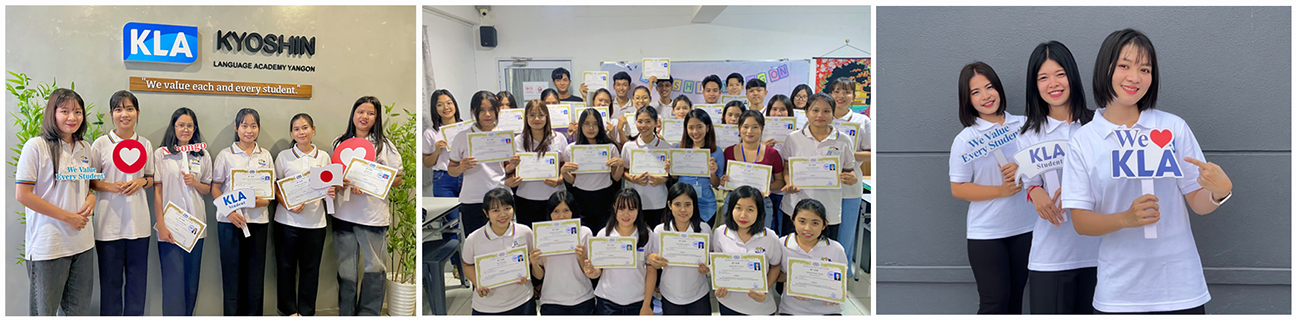
Japanese Language Education
At Kakehashi Myanmar, we provide Japanese language education tailored to the specific goals of each candidate, including the Technical Intern Training Program, Specified Skilled Worker (SSW) Program, Employment for Skill Development Program, and Study in Japan.
For candidates whose primary goal is employment in Japan, we place particular emphasis on developing practical Japanese language skills that enable them to communicate smoothly and effectively with Japanese people in the workplace.
For Technical Intern Trainees, we have traditionally provided Japanese language education in Myanmar with the goal of achieving JLPT N4 or higher, and ultimately reaching JLPT N3 level before departure for Japan.
Going forward, we will further enhance our Japanese language education to support the Employment for Skill Development Program and Specified Skilled Worker Program, providing training that is aligned with each candidate’s future career goals.
Education for Living in Japan
To help candidates live safely, comfortably, and independently in Japan, we provide education on everyday life in Japan before they leave Myanmar.
- How to use public transportation, including trains and buses
- How to shop and use banks and post offices
- Waste separation and proper disposal
- Bicycle safety and proper riding practices
- Japanese traffic rules
- Japanese laws and everyday rules
- Basic disaster preparedness and safety awareness
- Japanese culture and customs
We believe it is important for candidates to learn what they need to know before coming to Japan, rather than facing difficulties after they arrive.
Education for Working in Japan
To work successfully in a Japanese company, it is important not only to acquire the necessary job skills but also to understand Japanese workplace culture and expectations.
For this reason, we provide education in essential workplace and professional skills, including:
- Greetings and appropriate responses
- Punctuality and time management
- Hō-Ren-Sō — reporting, communicating, and consulting
- Teamwork
- Organization and cleanliness
- Safety awareness
- Workplace communication
- Business etiquette
- A responsible attitude toward work
From “People Who Can Speak Japanese” to “People Trusted in Japanese Workplaces”
This is the goal of our education.
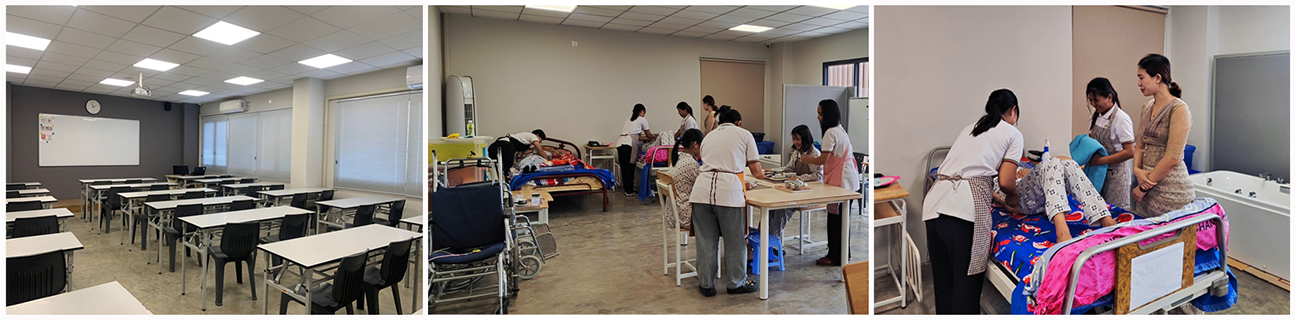
Training for Caregiver
Japanese Language * Caregiving Knowledge * Practical Skills
People working in Japan’s caregiving sector need not only Japanese language proficiency, but also specialized knowledge of caregiving and the practical skills required in real-world care settings.
At Kakehashi Myanmar, we provide comprehensive training for candidates pursuing careers in caregiving by combining “Japanese for Caregiving” with “Practical Caregiving Education.”
Japanese for Caregiving
Candidates learn the Japanese language and communication skills needed in caregiving workplaces, including:
- Basic vocabulary commonly used in caregiving settings
- Vocabulary related to body parts, conditions, and symptoms
- Communication with care recipients
- Communication among caregiving staff
- Giving and receiving instructions, reporting, communicating, and consulting
- Japanese used in caregiving records and documentation
- Hospitality, appropriate language, and keigo (polite Japanese)
- Specialized caregiving terminology
Practical Caregiving Education
We provide hands-on, practical training based on situations that candidates are likely to encounter in actual caregiving workplaces, including:
- Transfers from bed to wheelchair
- Wheelchair operation and assistance
- Assistance with meals
- Toileting assistance
- Bathing assistance
- Assistance with dressing and undressing
- Repositioning and changing body positions
- Mobility and walking assistance
- Communication with older adults
- Prevention of care-related accidents and safety management
Our goal is not simply to develop people who “understand Japanese used in caregiving,” but to develop “caregiving professionals who can use Japanese effectively while providing care.”