Kakehashi Myanmar Overseas Employment Agency
 why-myanmar
Why Myanmar Talent is Chosen by Japanese Companies
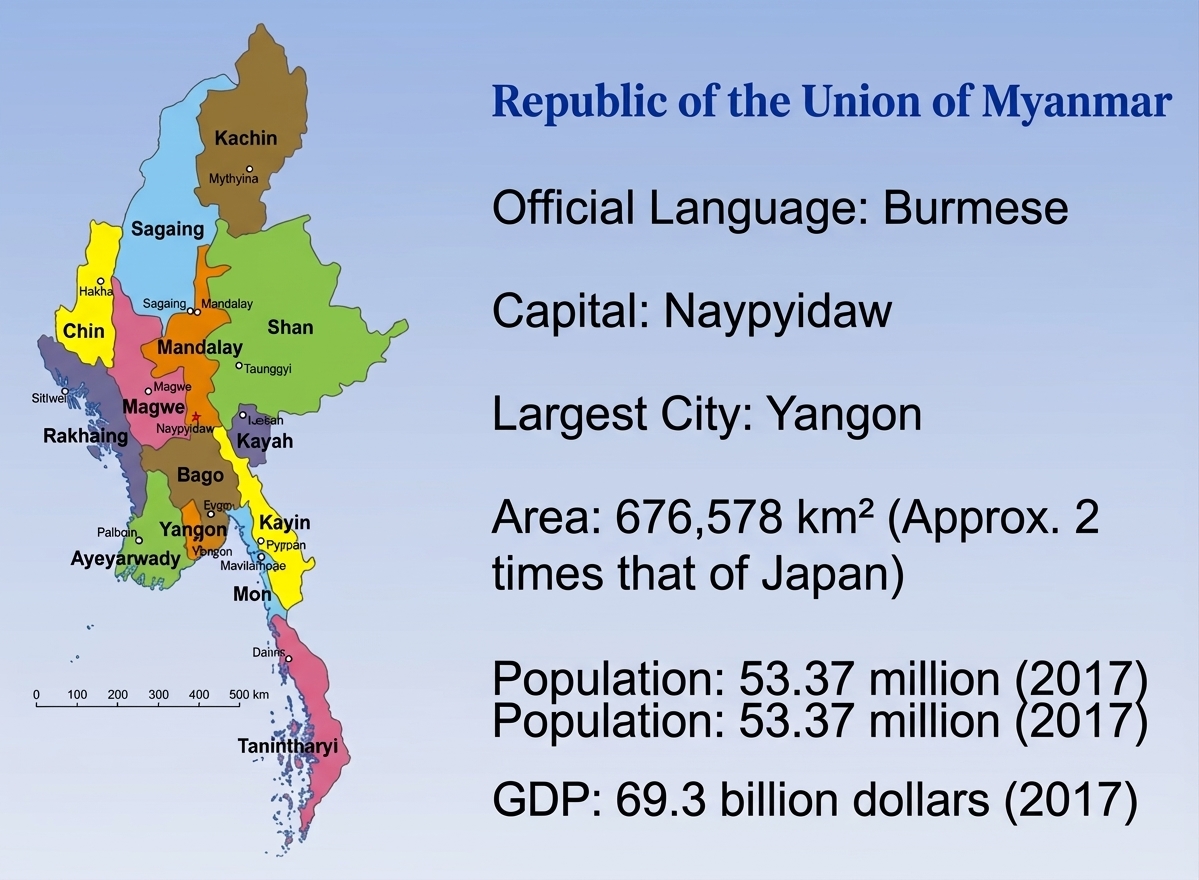
The total population of Myanmar is approximately 55.18 million (as of mid-2026 estimates). With a large young population, many young people have a strong desire to work in Japan, acquire skills, and build a better future for themselves and their families.
At Kakehashi Myanmar, we educate such young people in the Japanese language, Japanese culture, lifestyle habits, and basic attitudes as working members of society, working to nurture human resources trusted by Japanese companies.
1. Abundant Young Labor Force
Myanmar has a large young generation, and there is an abundance of human resources eager to acquire skills and experience while working in Japan.
A major characteristic is that many young people look ahead to the future and aim for long-term career development.
2. Many Serious and Diligent Workers
Myanmar people tend to approach assigned tasks seriously and strive to perform their work responsibly.
In particular, many human resources who have studied the Japanese language for a long period with the goal of working in Japan and have made thorough preparations have a high motivation for employment and spare no effort.
3. A Culture of Respect for Elders and Superiors
In Myanmar, the culture of respecting elders and valuing others is cherished.
Even in the workplace, many human resources value the attitude of learning from seniors and superiors, as well as cooperation with those around them, making it easier for them to adapt to the working environment of Japanese companies.
4. Culture and Values Relatively Close to Japan
Myanmar and Japan share common values, such as valuing family, respecting elders, and emphasizing politeness.
While there are naturally different cultures, another characteristic is that there are many commonalities that serve as a foundation for understanding Japanese lifestyle habits and workplace culture.
5. Friendly Attitude Toward Japanese People and Culture
In Myanmar, many young people hold a positive impression of Japan and are interested in the Japanese language, Japanese culture, and education and employment in Japan.
As a result, an increasing number of human resources view working in Japan not merely as an opportunity for overseas employment, but as a way to connect to their own personal growth and future career.
6. High Motivation to Work in Japan
Acquiring specialized skills and experience while working in Japan is a major opportunity for many Myanmar youth to improve their future careers and living standards.
Therefore, many human resources have a strong desire to cherish employment opportunities in Japan, continue working stably, improve their Japanese language proficiency and specialized skills, and connect them to their future.
In addition, interest in the Japanese language, Japanese culture, and studying or working in Japan is high in Myanmar, with numerous young people hoping to work in Japan. As one indicator of this, the number of examinees for the Japanese-Language Proficiency Test (JLPT) reached approximately 179,000 per year in 2024, reflecting high interest in learning Japanese.
Thus, the fact that many young people learn Japanese from an early stage with the goal of working in Japan and proceed with preparations for future career formation is one of the major characteristics of Myanmar talent.